Hidden on Tape. Early Video Art in Europe
-

Press Release
A history of video art in Europe has yet to be written. While exhibitions and publications have long focused on a handful of pioneers, primarily from North America, the beginnings of video art across Europe as a whole have received little attention to date.
“Hidden on Tape. Early Video Art in Europe” offers a new perspective on this history: with over 120 works from some 30 countries, the exhibition traces the emergence of artistic practices in television and video from the 1950s through the 1990s. It reveals the many beginnings of an art form that developed in a politically divided Europe at various times and under different cultural, social, and political conditions.
The exhibition brings together internationally renowned artists with those whose contributions have so far gone largely unnoticed. Some of their works remained unseen for decades, hidden away in archives, studios, and broadcasting stations. They were tracked down through a multi-year international research project conducted by ECAL/University of Art and Design Lausanne and Université Paris 8 in collaboration with the ZKM | Karlsruhe. Some of the rediscovered tapes were restored by the ZKM’s Laboratory for Antiquated Video Systems, making them accessible once again.
Many Beginnings
The emergence of video art in Europe did not follow a uniform trajectory. Even before portable video equipment became available in the late 1960s, artists were experimenting in television studios or altering broadcast images by manipulating television sets. However, access to technical equipment, broadcast studios, and resources for artistic production varied considerably across Europe, shaped by political systems, cultural institutions, and economic conditions.
Beyond Borders
The artists did not work in isolation. Gradually, networks of persons and organizations emerged, and ideas, texts, and tapes circulated through festivals, exhibitions, publications, and informal channels, creating connections across national and ideological borders. Hidden on Tape brings to light the richness and diversity of early video art across Europe, revealing unexpected connections and shared artistic concerns.
An International Research Project
The exhibition arose from the research project The Emergence of Video Art in Europe, 1960–1980, led by François Bovier (ECAL/University of Art and Design Lausanne) and Grégoire Quenault (Université Paris 8) in close collaboration with Stéphanie Serra and an academic advisory committee (Slavko Kacunko, Laura Leuzzi, Chris Meigh-Andrews, Miklós Peternák, Lorella Scacco, and Tomasz Załuski). Over several years, a network of scholars conducted research across Europe. The results are documented in the publication Early Video Art in Europe. A Plural History (Les presses du réel, 2026). A publication accompanying the exhibition Hidden on Tape is in the works.
Hidden on Tape opens up a field of research that invites further investigations and new narratives. It asks whose contributions have shaped this history—and what stories remain to be discovered.
Artists
Marina Abramović, Vincenzo Agnetti, Keith Arnatt, Kevin Atherton, René Bauermeister, Samuel Beckett, Gábor Bódy, Marinus Boezem, Gabrielle Bown, Geta Brătescu, Wendy Brown, Wojciech Bruszewski, Livinus & Jeep van de Bundt, Robert Cahen, Geneviève Calame, Eugenio Carmi, César, Giuseppe Chiari, Gianni Colombo, Salvador Dalí, Ernesto de Sousa, Braco Dimitrijević, Peter Donebauer, Ana Nuša Dragan, Srečo Dragan, Lili Dujourie, Valie Export, Fernsehgalerie Gerry Schum (Gerry Schum, Ursula Wevers), Lucio Fontana, Fred Forest, Ivan Ladislav Galeta, Jordi Galí, Yiulia Gazetopoulou, Kristaps Ģelzis, Karl Gerstner, Jochen Gerz, Gilbert & George, Sílvia Gubern, Henrikas Gulbinas, Izabella Gustowska, Károly Halász, David Hall, Barbara Hammann, Sigrún Harðardóttir, Ana Hatherly, Marianne Heske, Brian Hoey, Madelon Hooykaas, Isidore Isou, Sanja Iveković, Àngel Jové, Wolf Kahlen, Piotr Kamler, Jean Kerchbron, Imi Knoebel, Jannis Kounellis, Richard Kriesche, Tamara Krikorian, Klára Kuchta, Kaarel Kurismaa, Paweł Kwiek, Mervi Kytösalmi-Buhl, Ketty La Rocca, Ólafur Lárusson, Barbara Leisgen, Michael Leisgen, Jacques Lennep, František Lesák, Jacques Lizène, Antoni Llena, Urs Lüthi, Manon, Jolanta Marcolla, Dalibor Martinis, Dóra Maurer, Dieter Meier, Chris Meigh-Andrews, E. M. de Melo e Castro, Albena Mihaylova - Bendji, Gérald Minkoff, Michael Morgner, Antoni Muntadas, Emília Nadal, Suzanne Nessim, Jacques Louis Nyst, Marcel Odenbach, Ásta Ólafsdóttir, Muriel Olesen, Jean Otth, Nam June Paik, Stephen Partridge, Ewa Partum, Silvestre Pestana, pezoldo (Friederike Pezold), Otto Piene, Radek Pilař, Aris Prodromidis, Martial Raysse, Józef Robakowski, Ulrike Rosenbach, Tomáš Ruller, Niki de Saint Phalle, Anri Sala, Domingo Sarrey, Nicolas Schöffer, Elaine Shemilt, Ture Sjölander, Torben Søborg, Annegret Soltau, William Louis Sørensen, Elsa Stansfield, Lucie Svobodová, Anne Tallentire, Aldo Tambellini, Turppi Group, Günther Uecker, Júlia Ventura, Miha Vipotnik, Wolf Vostell, Lars Weck, Peter Weibel, Teresa Wennberg, VA Wölfl, Nil Yalter, Dimitris Yeros.
The exhibition is funded by the Cultural Foundation of the German Federal States.
Image - Gallery
-
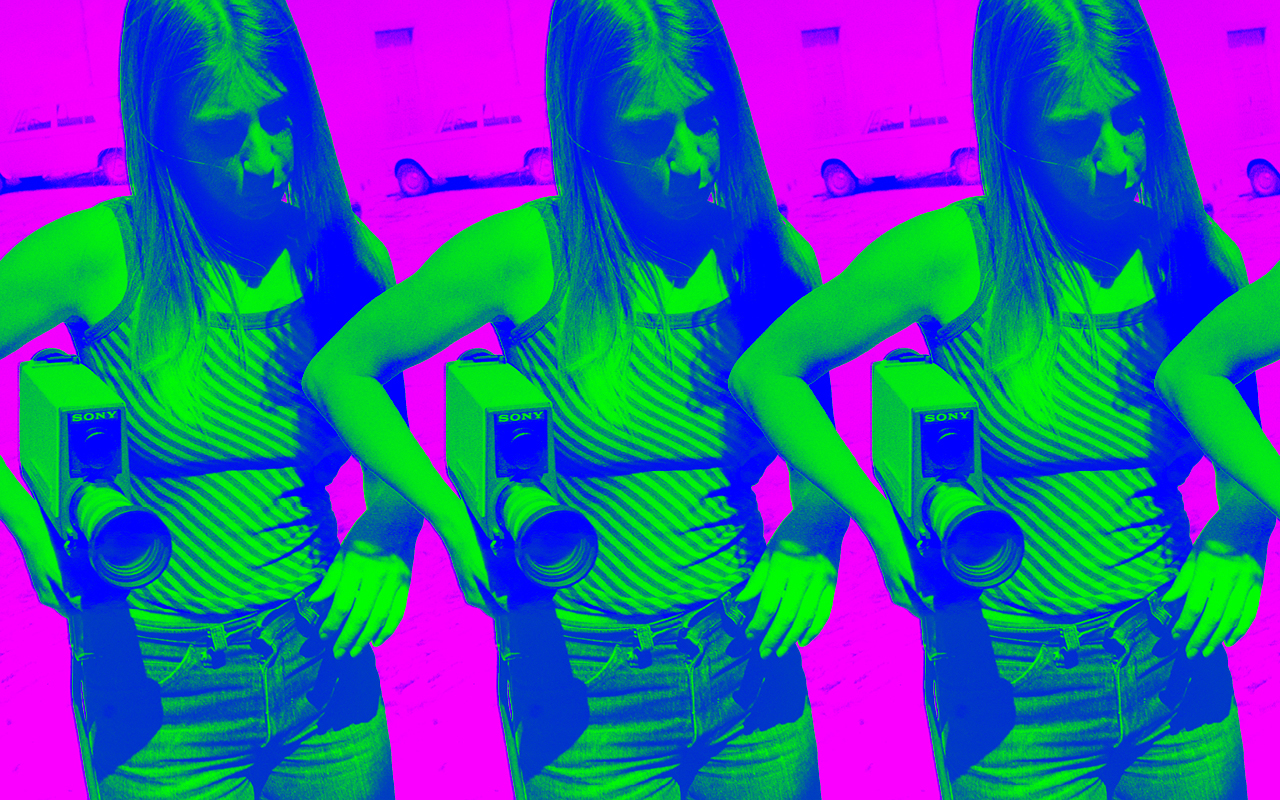
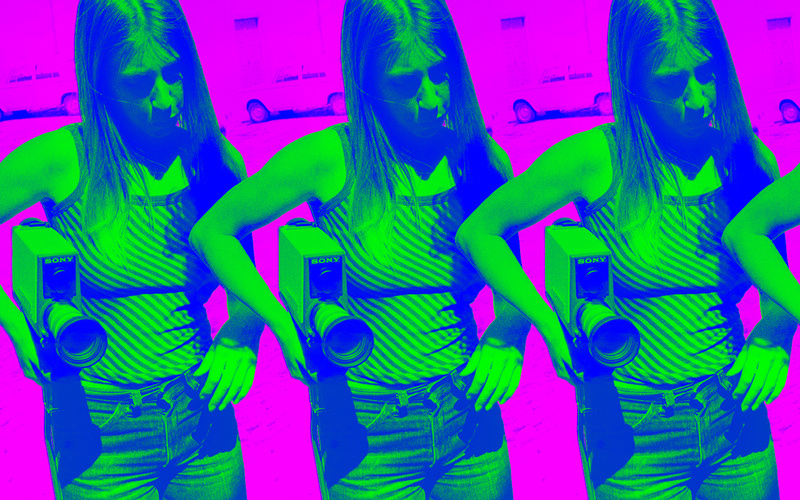 Sanja Iveković filming during the Motovun Video Meeting, 1976, color-adjusted© Marijan Susovski. Courtesy of Jadranka Vinterhalter, the Museum of Contemporary Art, Zagreb, and Sanja Iveković. Design: Demian Bern
-
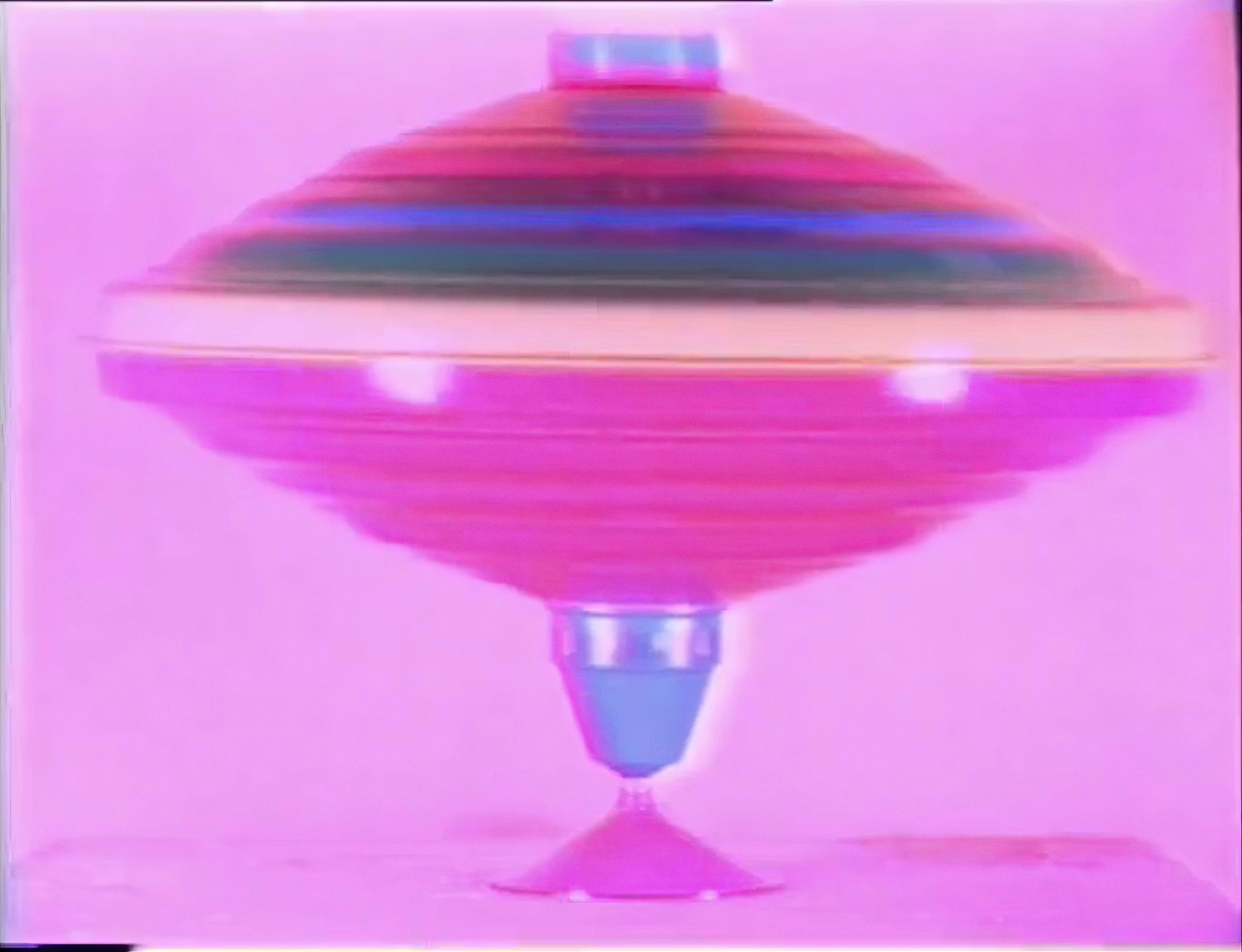
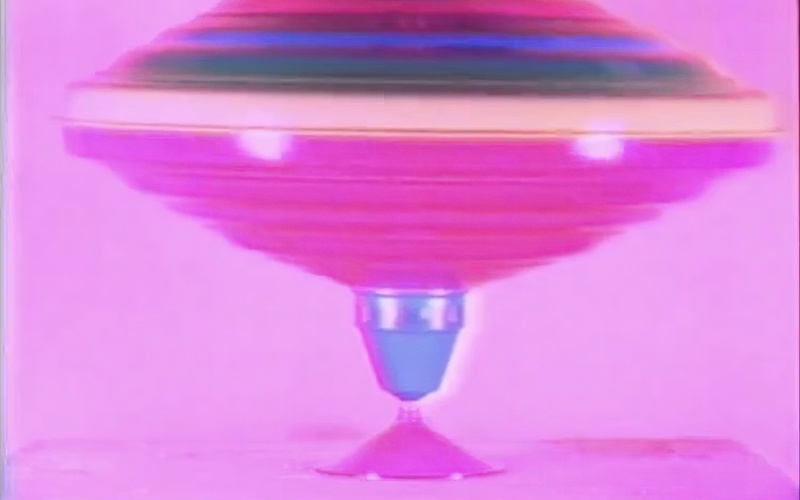 Mervi Kytösalmi-Buhl, Hyrrä (Spinning Top), 1978© Mervi Kytösalmi-Buhl
-
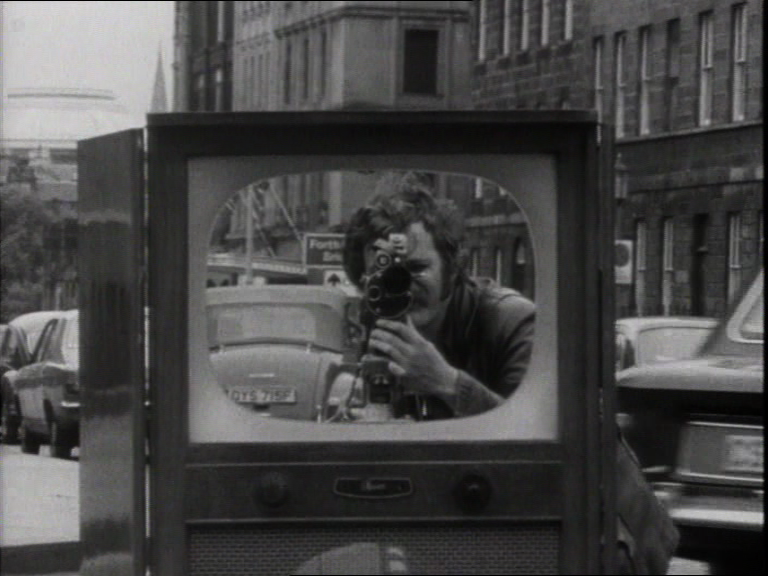
 David Hall, »TV Interruptions (7 TV Pieces)«, 1971, Betacam SP, b/w, mono, 00:23:14, ZKM | Center for Art and Media Karlsruhe© David Hall
-
 David Hall, »TV Interruptions (7 TV Pieces)«, 1971, Betacam SP, b/w, mono, 00:23:14, ZKM | Center for Art and Media.© David Hall
-
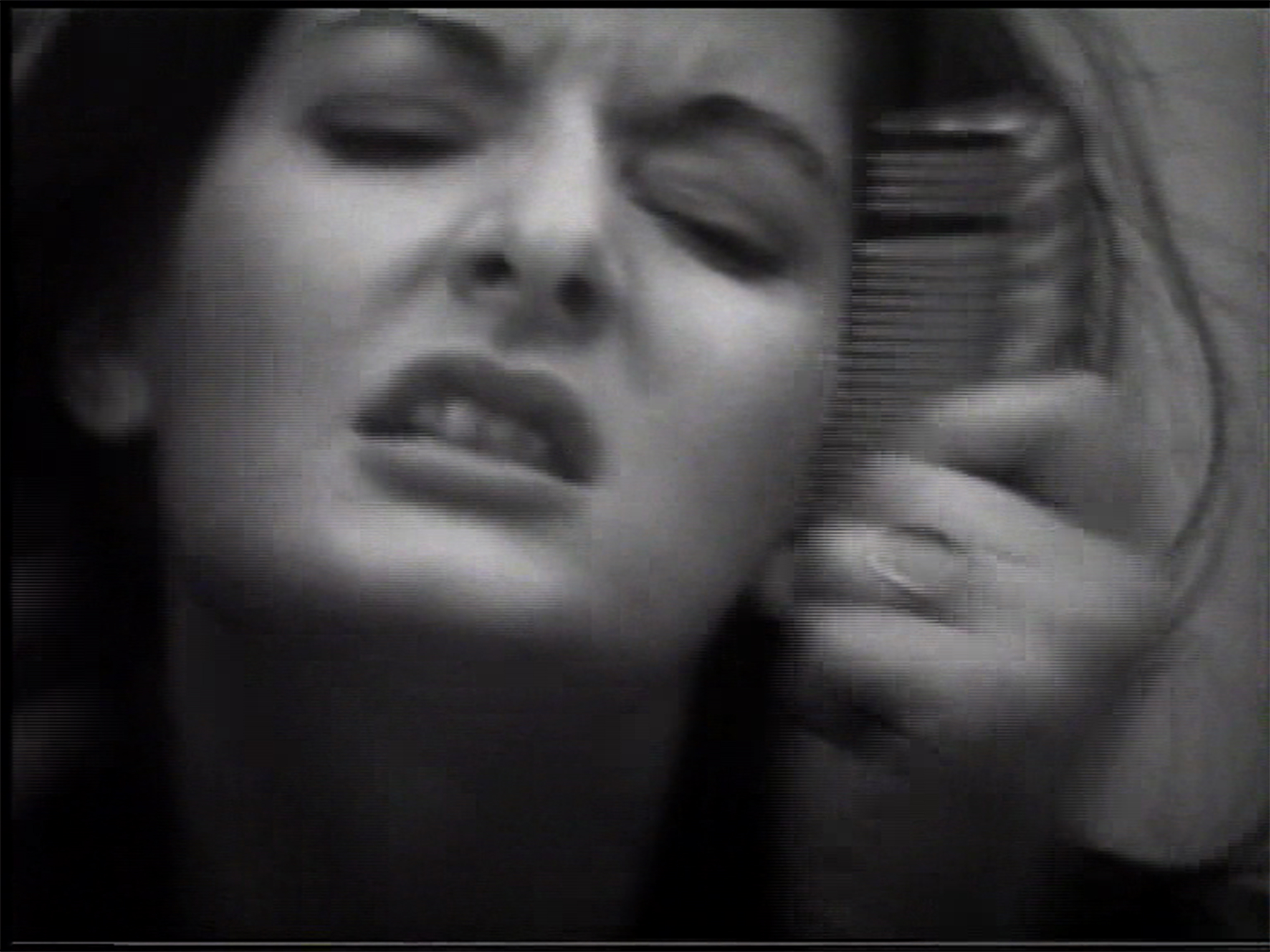
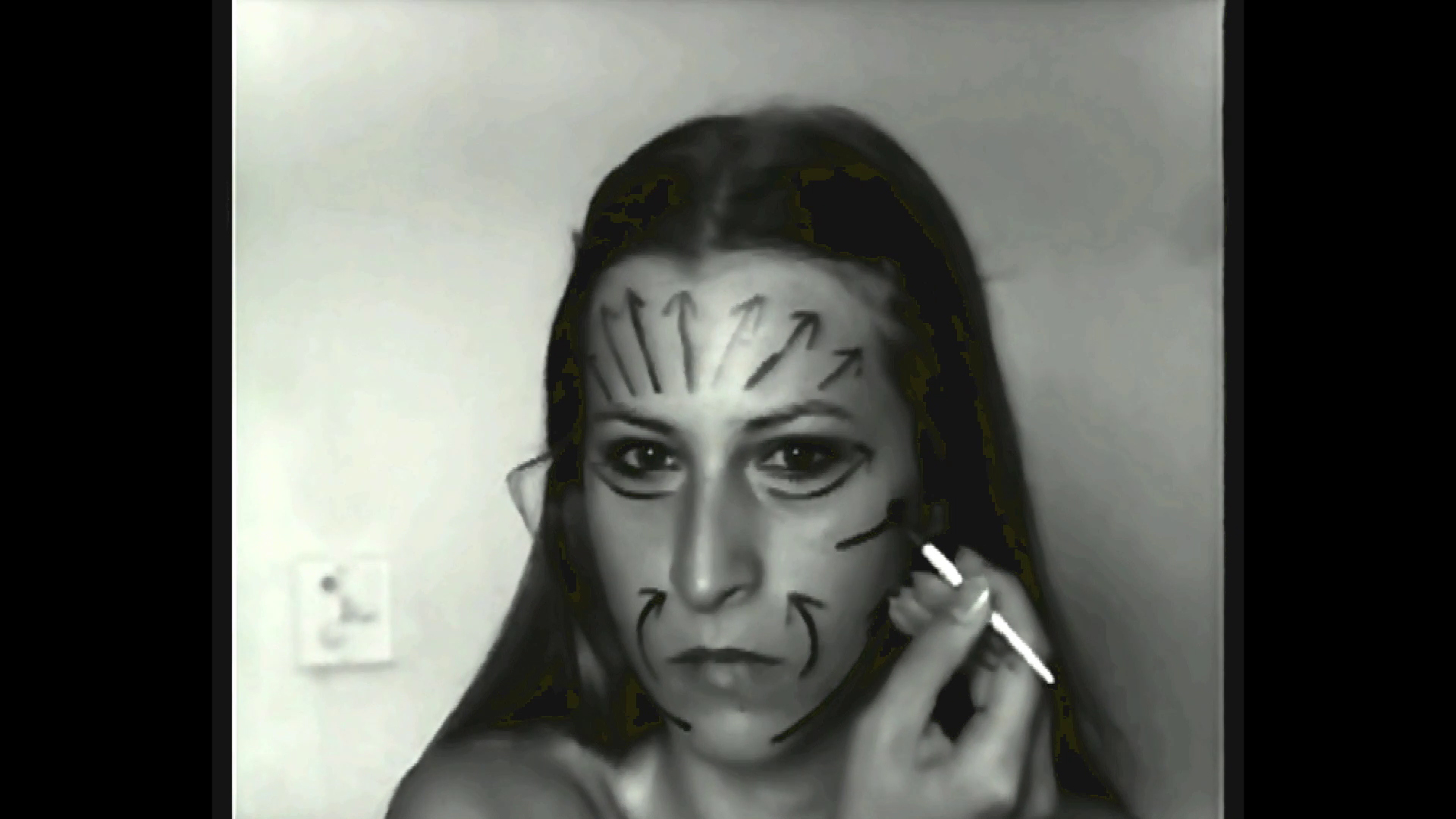
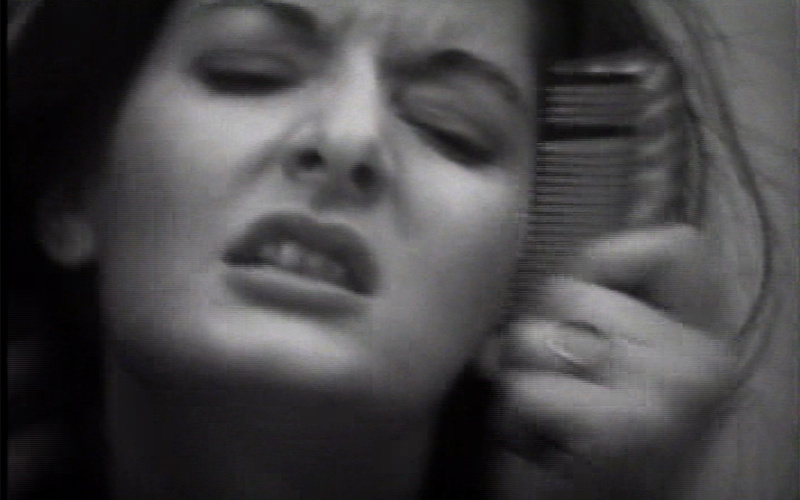 Marina Abramović, Art Must be Beautiful, the Artist Must be Beautiful, 1975© Marina Abramović, VG Bild-Kunst, Bonn 2026
-
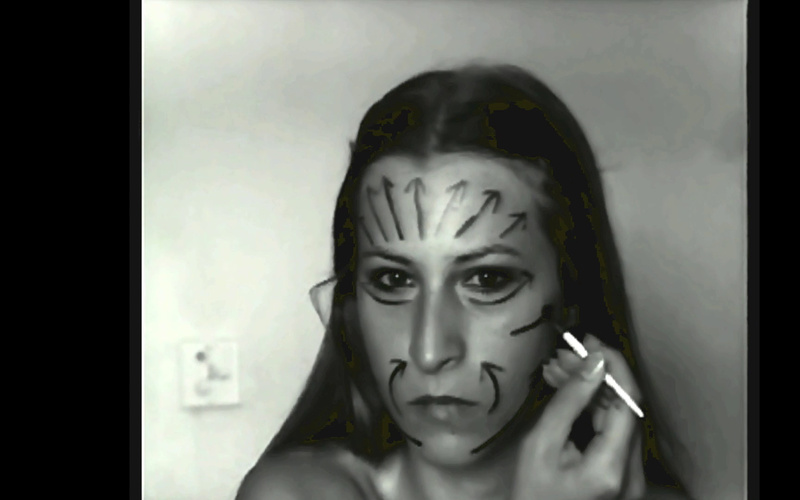 Sanja Iveković, Instructions N. 1, 1976© Sanja Iveković
-
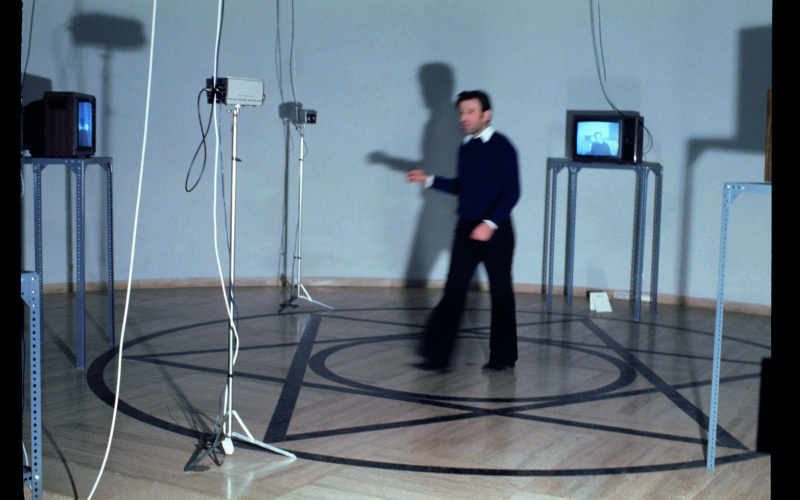 Peter Weibel, »Observation of observation: indeterminacy«, 1973© Archive Peter Weibel, Photo: Werner Schulz
-
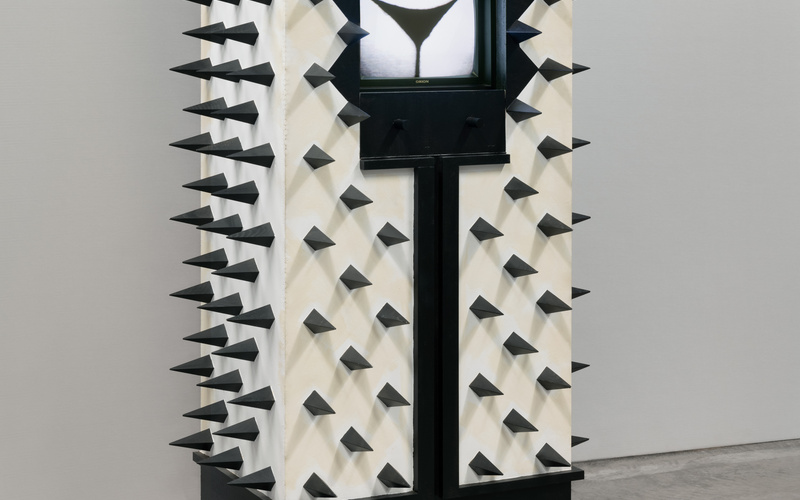 Friederike Pezold, »Die neue leibhaftige Körpersprache im Stachelkleidhaus« [The incarnate body language in a barbed house], 1989, Two-channel video installation; 2 monitors, 2 video tapes, 2 video players, wooden sculpture, 220 x 100 x 100 cm, ZKM | Center for Art and Media Karlsruhe.© Friederike Pezold; photo © ZKM | Center for Art and Media Karlsruhe, photo: Franz J. Wamhof