The Television as Gallery
Sat, May 30, 2026 – Sun, January 10, 2027
Atrium 1
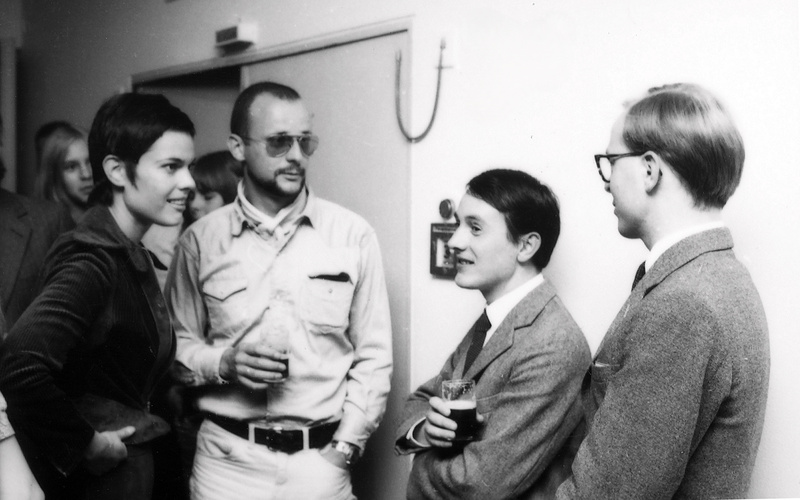
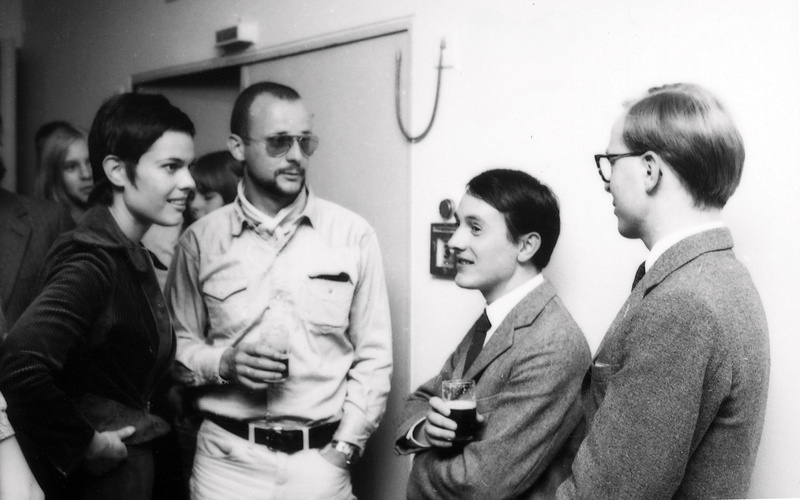
In April 1969, works of the international avant-garde appeared in an unexpected place: on the television screens of German living rooms. The filmmaker Gerry Schum and the art historian Ursula Wevers had transformed television into a space of exhibition for art. With the Fernsehgalerie Gerry Schum and the later videogalerie schum, they were among the first to seek to establish television and video as artistic media in their own right.
The exhibition The Television Set as Gallery: The Archive of Gerry Schum and Ursula Wevers tells the story of this now-legendary project while also marking a major acquisition: ZKM has acquired the Gerry Schum and Ursula Wevers Archive, thereby securing for future generations a significant archive of twentieth-century art. This acquisition was made possible through the support of the Kulturstiftung der Länder, the City of Karlsruhe, and the State of Baden-Württemberg.
By the late 1960s, the artwork as a discrete object was increasingly being called into question. Processes, actions, and site-specific works resisted conventional modes of collecting and display. Gerry Schum and Ursula Wevers’s response to this situation was as simple as it was radical: this art required a new medium.
On April 15, 1969, the Fernsehgalerie Gerry Schum was broadcast for the first time: ARD aired LAND ART, the first exhibition conceived for television. A second television exhibition followed on November 30, 1970, on Südwestfunk, under the title IDENTIFICATIONS. All films were conceived specifically for television and existed essentially only in the moment of broadcast. These productions—now part of the international canon of video art, land art, and conceptual art—were realized in collaboration with around thirty artists, including Joseph Beuys, Daniel Buren, Jan Dibbets, Richard Long, Mario Merz, Richard Serra, and Lawrence Weiner. In addition, television interventions by Keith Arnatt and Jan Dibbets interrupted the regular programme without prior announcement.
“One of our ideas is the communication of art instead of the possession of art objects,” as Gerry Schum put it. In fact, the project aimed not only at a new medium, but at a different public sphere for art and a new economy. The Fernsehgalerie functioned as a counter-model to the exclusivity of the museum, the gallery, and the art market.
Yet the structural limits of this critique of art as a commodity soon became apparent. When television broadcasters refused to continue the collaboration, the project had to adapt to precisely those structures of the art market it had originally sought to escape. In 1971, Schum and Wevers founded the videogalerie schum in Düsseldorf, thereby establishing a new and pioneering model—the first gallery in Europe dedicated exclusively to the production and distribution of video editions.
Drawing on the extensive archive, the exhibition tells a story of utopian aspirations, of success and failure—from Schum’s first films in 1967 to his suicide in 1973. At the same time, it resists reducing this history to a single protagonist. From the outset, the project was shaped by collaboration: initially with Bernhard Höke and Hannah Weitemeier, and above all with Ursula Wevers, who, from October 1968 onward, played a decisive role in shaping the realization of the Fernsehgalerie Gerry Schum and the later videogalerie schum.
The exhibition is based on the extensive archival material preserved by Ursula Wevers over more than fifty years. On view are not only the well-known film and video works, but also original 16 mm films and videotapes, historical video equipment, as well as correspondence, production documents, photographs, printed matter, and certificates. These materials offer insight into the conceptual work behind the projects, into institutional conflicts, and into the practical conditions of production.
The Fernsehgalerie and videogalerie schum are significant not only as pioneering art projects. They also reveal with particular clarity a dynamic that continues to shape the present: new media transform not only the form of art, but also the conditions of its production, distribution, and ownership.
Lorenzstraße 19
76135 Karlsruhe
+49 (0) 721 - 8100 - 1200
info@zkm.de