The Television as Gallery. The Gerry Schum and Ursula Wevers Archive
-

Press Release
The Television as Gallery: ZKM Acquires the Gerry Schum and Ursula Wevers Archive
One of the most significant archives in the history of television and video art comes to Karlsruhe
Exhibition opening: May 29, 2026
ZKM | Center for Art and Media Karlsruhe has acquired the Gerry Schum and Ursula Wevers Archive, securing an outstanding body of material on 20th-century art for future generations. The archive documents the development and activities of the Fernsehgalerie Gerry Schum and the videogalerie schum between 1968 and 1973. Both projects played a decisive role in establishing television and video as independent artistic media. The acquisition was made possible through the support of the Kulturstiftung der Länder, the City of Karlsruhe, and the State of Baden-Württemberg. From May 30, 2026, the exhibition The Television as Gallery. The Gerry Schum and Ursula Wevers Archive will present this extraordinary archive to the public.
The Television as Gallery
The Gerry Schum and Ursula Wevers Archive
May 30, 2026 – January 10, 2027
Opening: May 29, 2026, 7 pm
With the Fernsehgalerie, Gerry Schum and Ursula Wevers brought art directly into people’s living rooms in 1969 – a deliberate counter-model to the exclusivity of museums and the economic mechanisms of the art market. Their aim was to democratize artistic communication. “One of our ideas is the communication of art instead of the possession of art objects,” Gerry Schum declared programmatically. While art had appeared on television before, it had done so as documentation – not as an artwork existing only in the moment of transmission. The Fernsehgalerie responded to a profound transformation in art around 1970: processes, actions, and site-specific works increasingly eluded conventional forms of collecting and exhibiting. Schum and Wevers drew a conclusion that was as simple as it was radical: this art required a different medium.
Interventions in Public Broadcasting
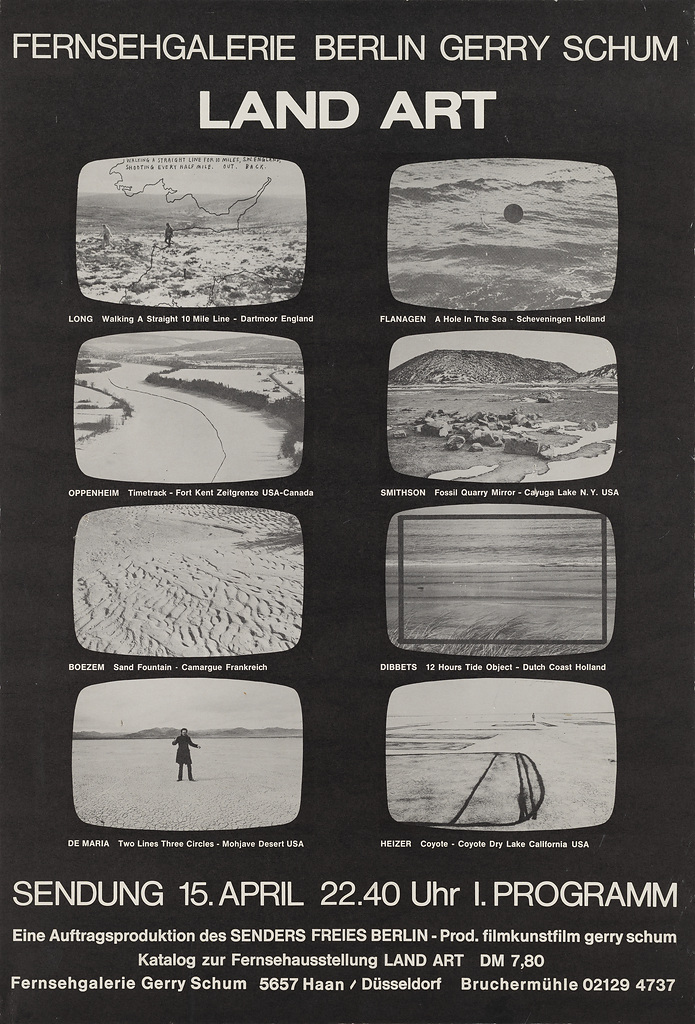
On April 15, 1969, LAND ART was broadcast on ARD as the first television exhibition; on November 30, 1970, IDENTIFICATIONS followed on Südwestfunk. These productions, now part of the international canon of video art, Land Art, and Conceptual Art, were realized in collaboration with 30 artists, including Joseph Beuys, Daniel Buren, Jan Dibbets, Gilbert & George, Richard Long, Mario Merz, Richard Serra, and Lawrence Weiner. They were complemented by television interventions by Keith Arnatt and Jan Dibbets, which interrupted regular programming without prior announcement. The works were presented without commentary or mediation—a break with established forms of representing art on television. When broadcasters refused to continue the collaboration after IDENTIFICATIONS, Schum and Wevers were forced to respond to the very market structures they had set out to challenge. In 1971, they founded the videogalerie schum in Düsseldorf, establishing a new model: the first gallery in Europe devoted exclusively to the production and distribution of video editions.
The Archive as a Record of Artistic Collaboration
For the first time, the exhibition offers insight into the full breadth of the archive. It documents not only the years of the Fernsehgalerie Gerry Schum and the videogalerie schum, but also Schum’s early film work from 1967 onward. The materials show that these projects were collaborative from the beginning: with the participating artists, with Bernhard Höke and Hannah Weitemeier, and, from October 1968 onward, with Ursula Wevers, who played a central role in realizing both the Fernsehgalerie Gerry Schum and the subsequent videogalerie schum.
The archive comprises 66 original 16 mm films and 81 videotapes in various historical formats, including completed works, preparatory stages, and unpublished projects. It also contains audio recordings, drawings, collages, and objects by artists, as well as correspondence, technical documentation, printed matter, photographs, press and publication materials, and historical video equipment. Together, these materials document the conceptual work, institutional negotiations, and practical conditions behind the productions.
Following Gerry Schum’s early death in 1973, Ursula Wevers preserved the extensive archive for more than five decades and ensured its international visibility through lectures and exhibitions.
“The acquisition of the archive by ZKM means a great deal to me and fills me with great joy. After having cared for its preservation and maintenance over many years, I now know that the archival holdings are in good hands and will be permanently secured for future generations,” explains Ursula Wevers.
ZKM – Expertise in Preserving and Researching Audiovisual Archives
The Gerry Schum and Ursula Wevers Archive is among the most significant acquisitions for ZKM’s collection and archive in recent years. With more than 250 artists’ and theorists’ estates and archives, a video research collection of over 30,000 tapes, and an in-house Laboratory for Antiquated Video Systems, ZKM offers ideal conditions for preserving, restoring, researching, and making historical audiovisual materials accessible to the public.
Image - Gallery
-
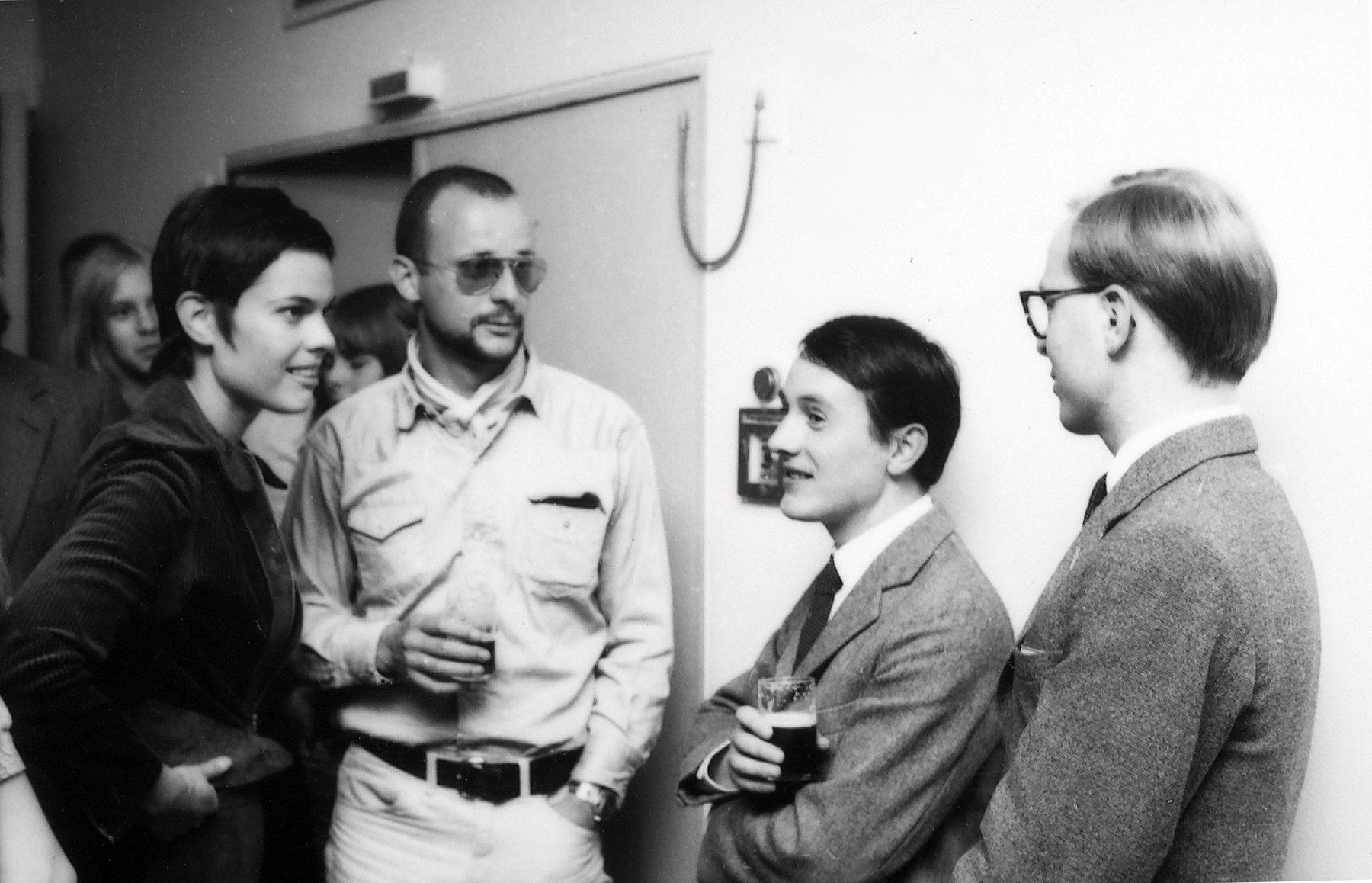
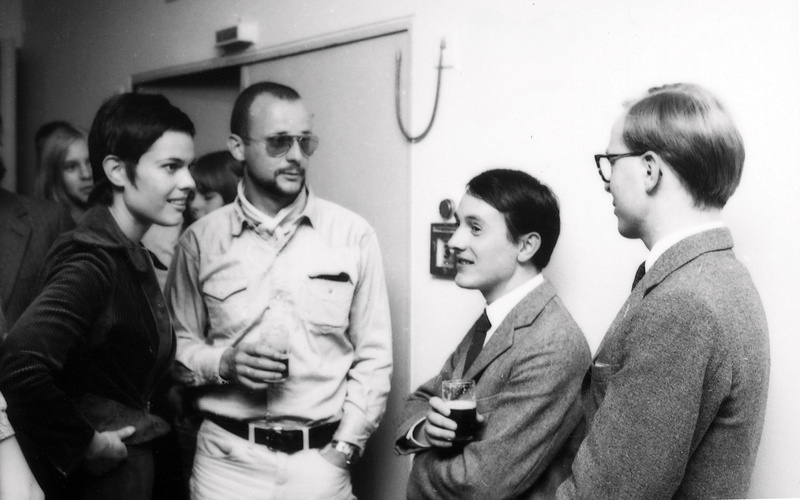
 Gerry Schum und Ursula Wevers mit Gilbert & George bei der Eröffnung der Ausstellung »The Paintings« von Gilbert & George im Kunstverein für die Rheinlande und Westfalen, Düsseldorf, 1971© the estate of Manfred Tischer, www.tischer.org
 -
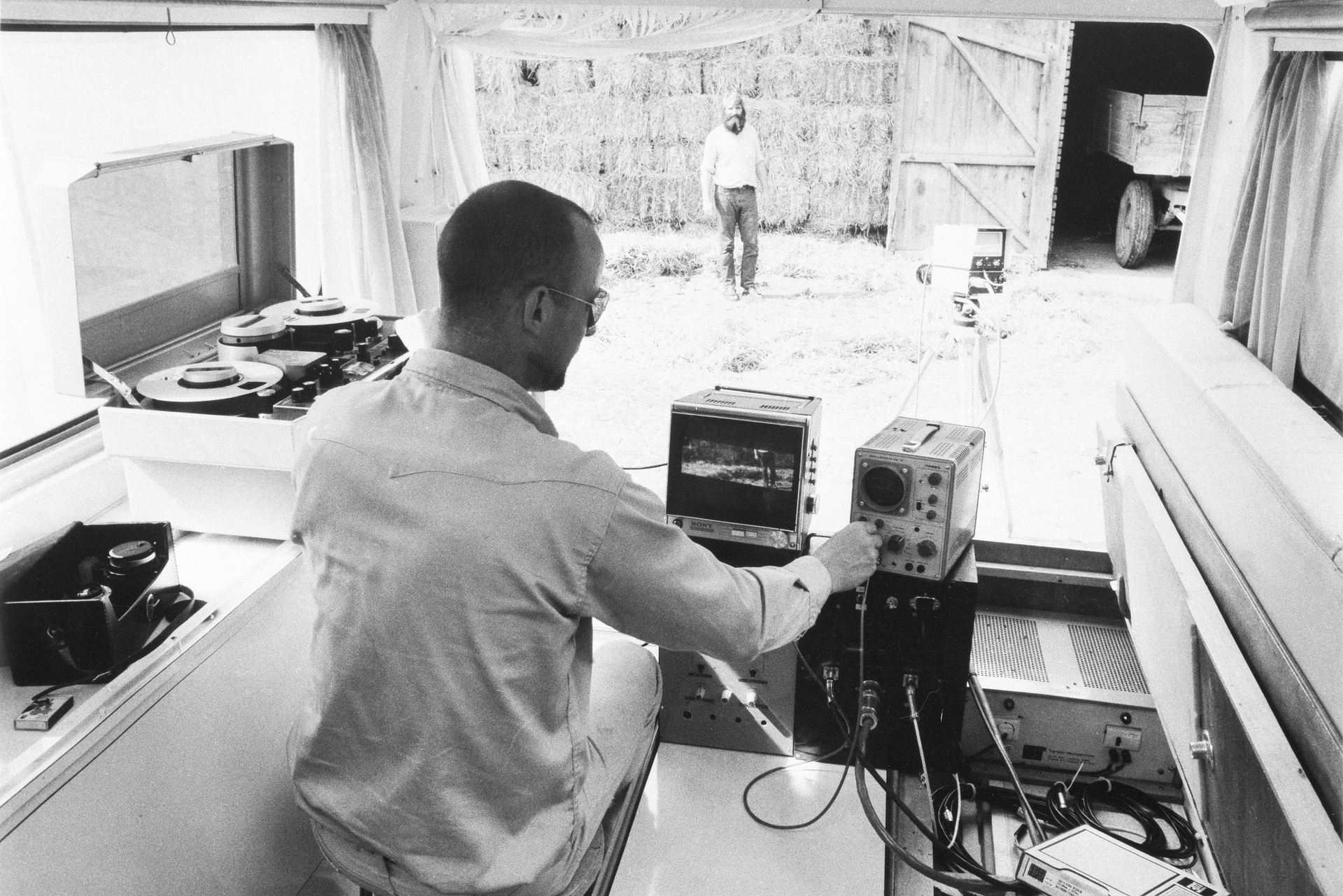
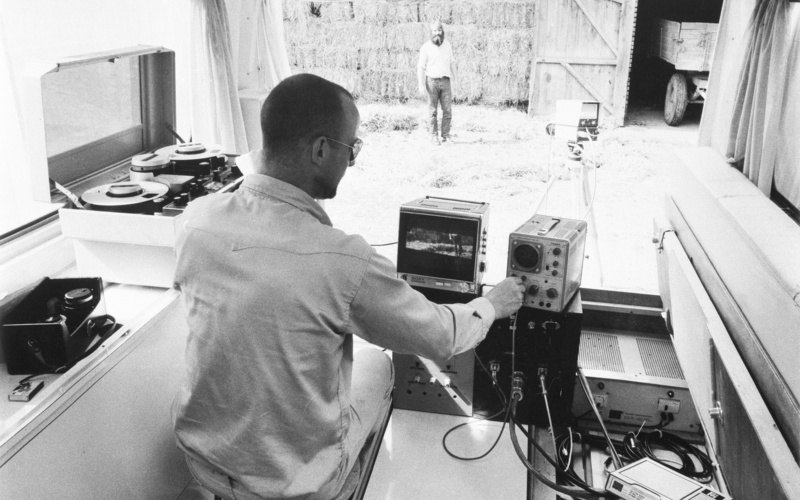 Ursula Wevers, »Gerry Schum und Ulrich Rückriem bei den Dreharbeiten zu ›Kreise‹, Nörvenich, 1971« [Gerry Schum and Ulrich Rückriem during the filming of »Kreise«, Nörvenich, 1971], 1971, black-and-white photograph on Aludibond, 26.7 x 40 cm© Ursula Wevers © ZKM | Center for Art and Media Karlsruhe
 -
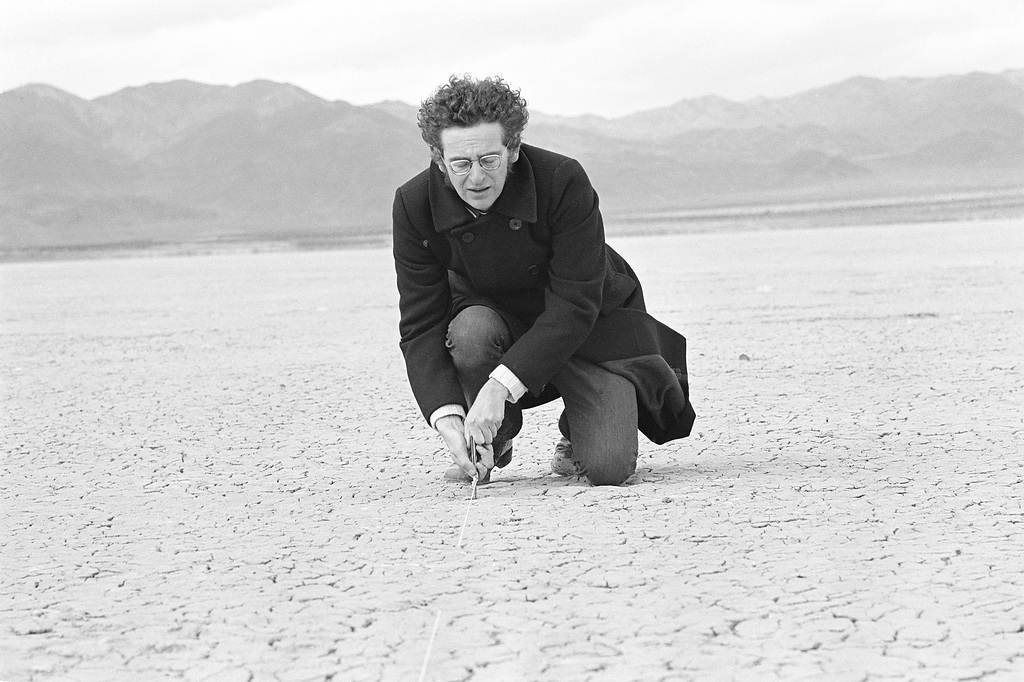
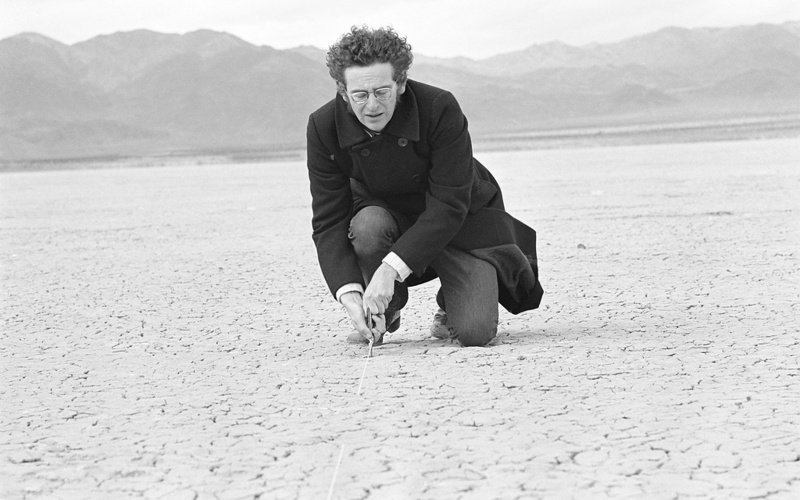 Gerry Schum, »Walter De Maria bei den Dreharbeiten zu ›Two Lines Three Circles on the Desert‹ (Beitrag zur Fernsehausstellung ›LAND ART‹, Fernsehgalerie Gerry Schum), Mojave Desert, USA, März 1969« [»Walter De Maria during the filming of ›Two Lines Three Circles on the Desert‹ (contribution to the television exhibition ›LAND ART,‹ Gerry Schum Television Gallery), Mojave Desert, USA, March 1969«], 1969, black-and-white photograph© Gerry Schum © ZKM | Center for Art and Media Karlsruhe
 -
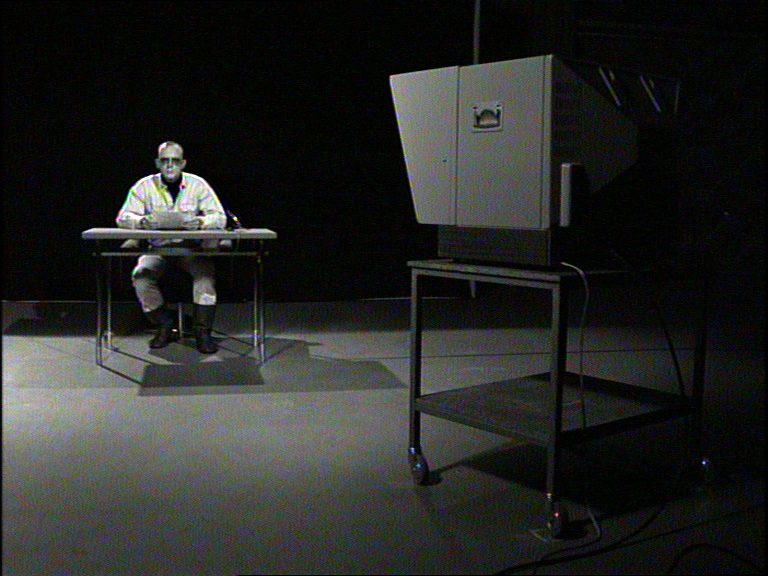
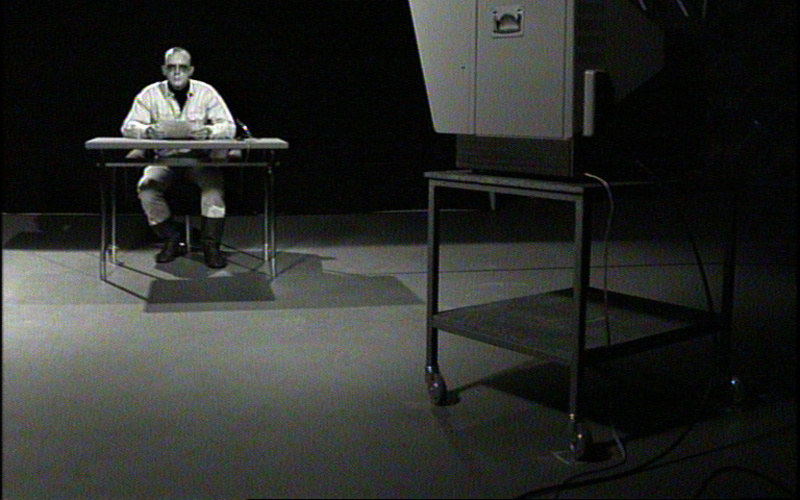 Gerry Schum during the introduction to the program »IDENTIFICATIONS« on November 30, 1970, on ARD; video: Fernsehgalerie Gerry Schum, »IDENTIFICATIONS,« 1970, 16mm film, digitized, with and without sound, b/w, 42:24 min, video still© Archive Gerry Schum and Ursula Wevers, ZKM | Center for Art and Media Karlsruhe
 -
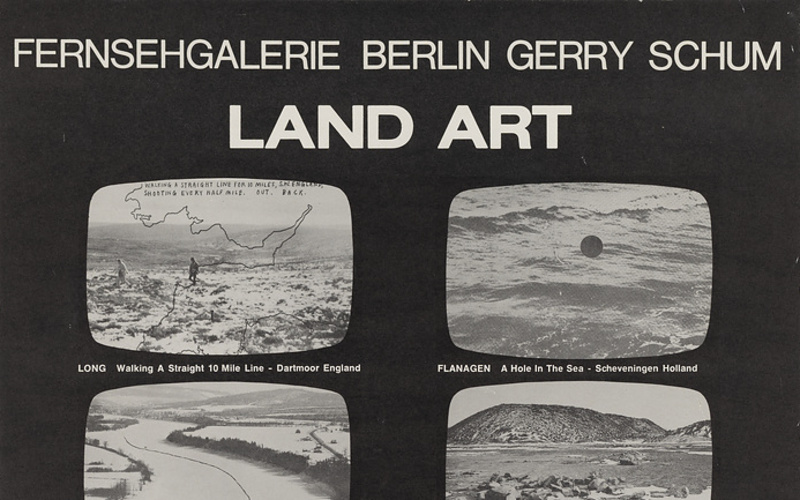 Gerry Schum, Ursula Wevers, »Fernsehgalerie Berlin Gerry Schum. Land Art«, 1969, print on paper, 59 x 42 cm, ZKM | Center for Art and Media Karlsruhe.© Ursula Wevers; photo © ZKM | Center for Art and Media Karlsruhe, photo: Franz J. Wamhof