Symposium
Die Fabrikation der Wahrheit
Fri, October 24, 2025
Medientheater
Vortragssaal

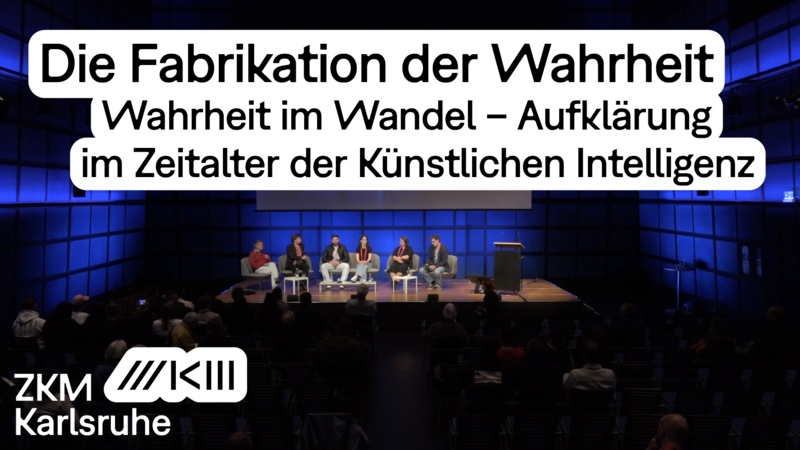
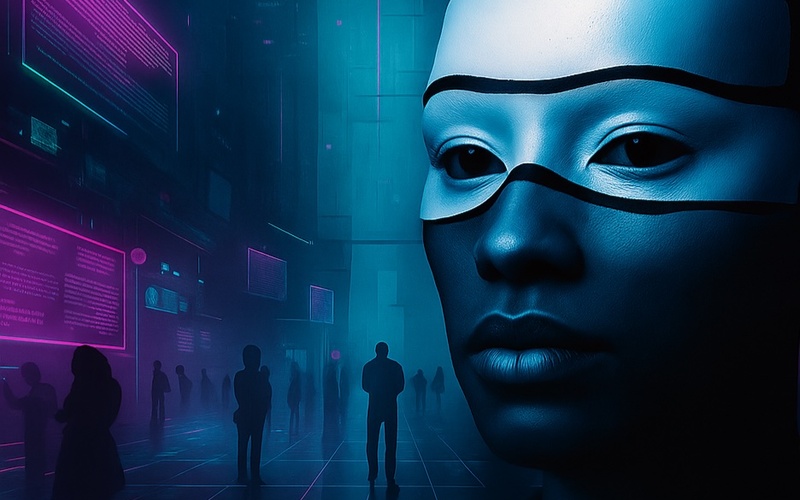
Digital disinformation and AI-generated content are transforming the way we perceive and evaluate information. In cooperation with HKA – Karlsruhe University of Applied Sciences and supported by the ZKM as an educational partner, the symposium “The Fabrication of Truth” provides a platform to highlight current challenges and explore new perspectives.
The symposium is part of the project “Reality Check: Fake or Fact in the Age of Generative AI”, initiated by HKA’s Institute for Intelligent Interaction and Immersive Experience and funded by the Carl Zeiss Foundation. Its aim is to raise awareness—especially among young people—of the challenges posed by fake news, deepfakes, and digital manipulation.
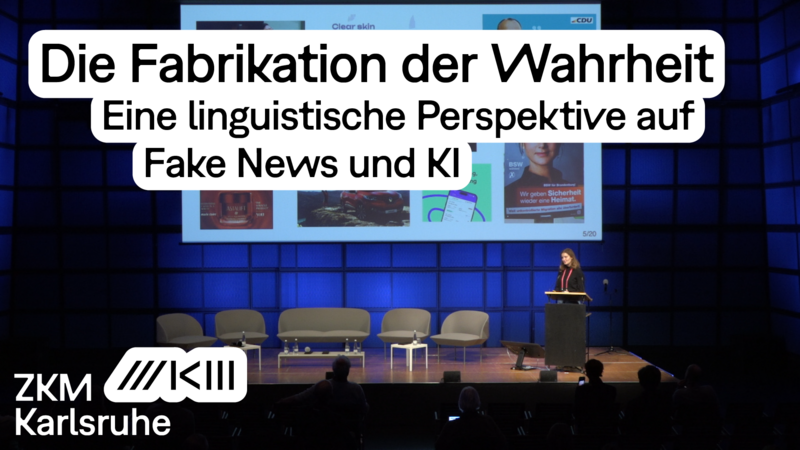
Science is increasingly exposed to hostility in the form of strategic questioning and organized attempts at delegitimization—such as in the contexts of climate research, pandemic management, or gender issues. This puts not only scientific knowledge itself but also the very idea of science as a trustworthy means of accessing reality under pressure.
The lecture focuses on a specific form of organized anti-science activity, which I term the strategic construction of epistemic unreality. This refers to the deliberate creation and dissemination of disinformation related to scientific findings, with the aim of undermining their validity, authority, or relevance.
Digital media lie at the center of this phenomenon, serving as channels for both fragmented, emotionally charged micro-disinformation and complex, ideologically driven disinformation narratives. Differences in motivations and strategies are analyzed, with a detailed case study on current climate change denial used to illustrate these dynamics.
Particular attention is given to the role of artificial intelligence, which can act as a technological amplifier, making disinformation more efficient, scalable, and emotionally resonant—through automated content generation, deepfakes and other fakes, bot networks, and the targeted exploitation of AI models.
Finally, the lecture discusses the potential impacts of such epistemic attacks on affective polarization processes and on society’s collective capacity to construct shared reality.
Lorenzstraße 19
76135 Karlsruhe
+49 (0) 721 - 8100 - 1200
info@zkm.de