Conference
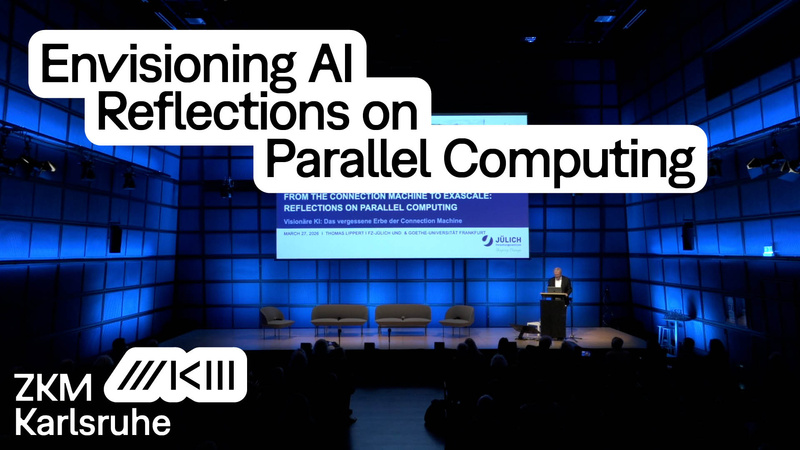
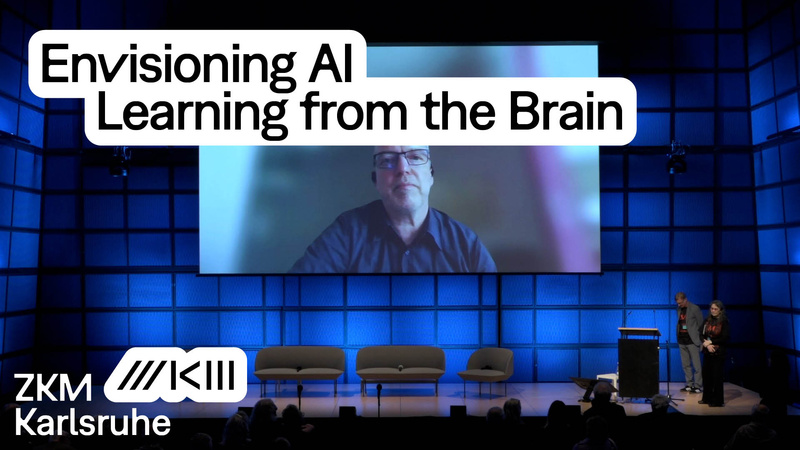
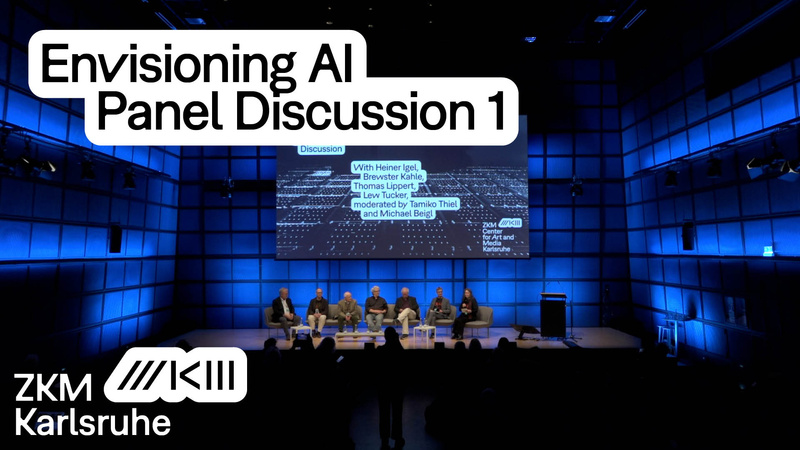
Envisioning AI: Legacy and Impact of the Connection Machine
Fri, March 27 – Sat, March 28, 2026
Media Theater
Online


Why do certain technologies fall into oblivion—and what can we learn from them today?
How did the Connection Machine combine computation, design, and ideas of intelligence?
And what does its example reveal about today’s largely opaque AI systems?
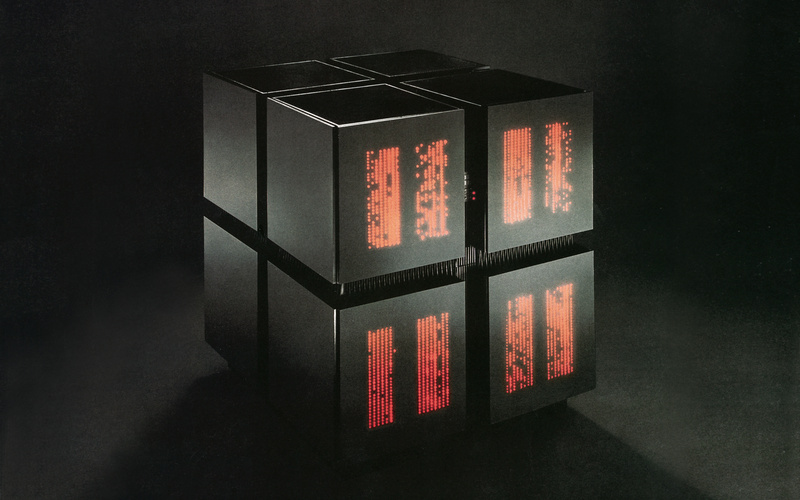
The Connection Machine (CM) was the first commercial supercomputer with a massively parallel architecture – a technological pioneering achievement that contributed significantly to the development of modern high-performance computers (HPC) and AI systems. Developed in the years between 1983 and 1994 by Thinking Machines Corporation (TMC), the Connection Machines – featuring the models CM-1, CM-2, and CM-5 – were inspired by the question of how intelligence emerges in the human brain through complex, networked, and parallel processing.
Beyond its technical innovations, the CM was distinguished by a design philosophy that treated visualization as an integral part of computation. It translated abstract principles such as massive parallelism into a spatial, “electronic brain”–like form that made internal processes perceptible. At a time when contemporary AI systems—especially large-scale language models—largely remain visually opaque, the CM continues to serve as a reference for the epistemic role of design in mediating between technical complexity and broader comprehension.
The diverse expertise that came together in the CM series found its way into the work of influential technology companies through various paths following the company’s bankruptcy. For instance, parts of TMC were acquired directly by Sun Microsystems in 1994 (which was itself later acquired by Oracle in 2010). In addition, several innovative startups founded by former TMC employees were taken over by big digital corporations – such as Alexa Internet by Amazon or Metaweb by Google. Despite its far-reaching technological influence, CM’s formative role in the history of AI and high-performance computing remained largely unrecognized after TMC filed for bankruptcy in 1994. The aim of the upcoming conference is therefore to foreground CM’s previously unknown legacy: as a visionary technology that shaped the development of today’s AI and supercomputing landscape. This will be accomplished through three thematic sections exploring the following aspects of CM: its technological complexity, the aesthetics of its design, and the AI landscape as of today. At the same time, the conference aims to analyze why the achievements of this supercomputer – so far ahead of its time – have faded into obscurity.
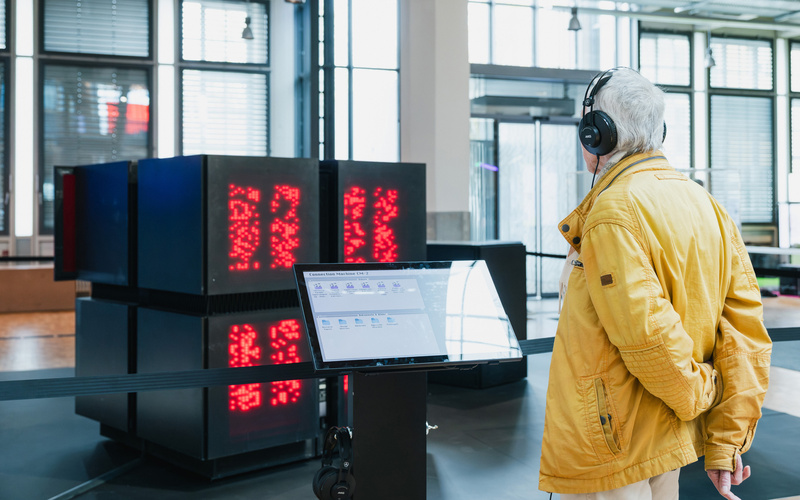
In parallel to the conference, a historical CM-2 will be on display in the ZKM foyer.
Lorenzstraße 19
76135 Karlsruhe
+49 (0) 721 - 8100 - 1200
info@zkm.de