Jeffrey Shaw
The Virtual Museum
1991
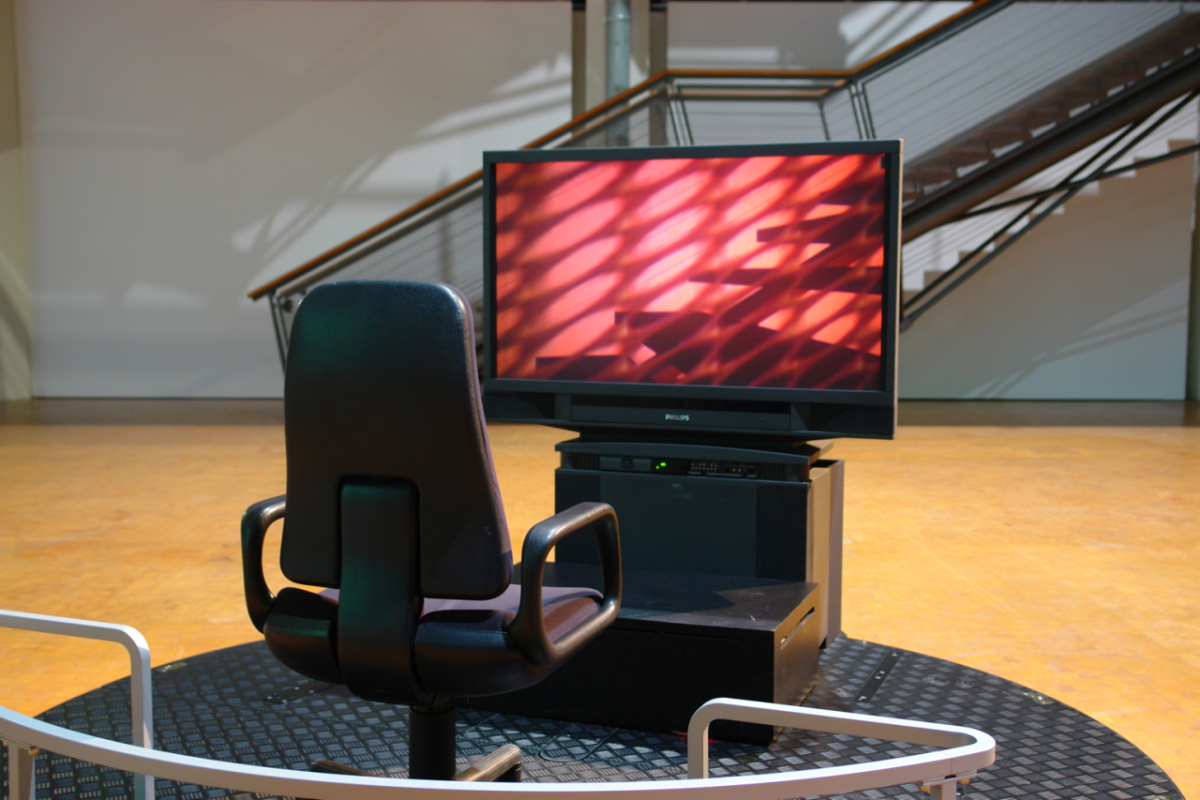
© Jeffrey Shaw; Photo © ZKM | Center for Art and Media, Photo: Sónia Alves
- Artist / Artist group
- Jeffrey Shaw
- Title
- The Virtual Museum
- Year
- 1991
- Category
- Computer-based
- Installation
- Material / Technique
- electric rotating platform interface, armchair motion sensors interface, custom-made electronics, computer (PC, operating system: Linux, custom software), rear-projection monitor
- Dimensions / Duration
- 170 x 250 x 250 cm
- Description
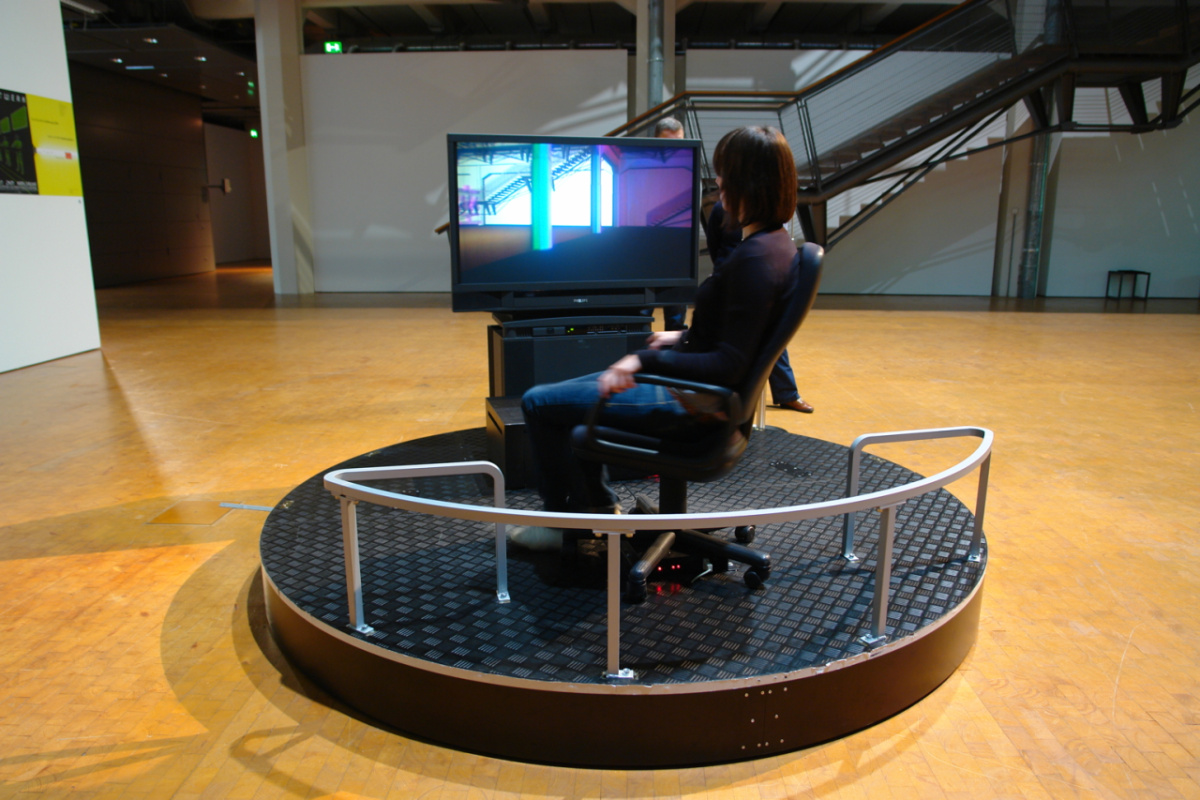
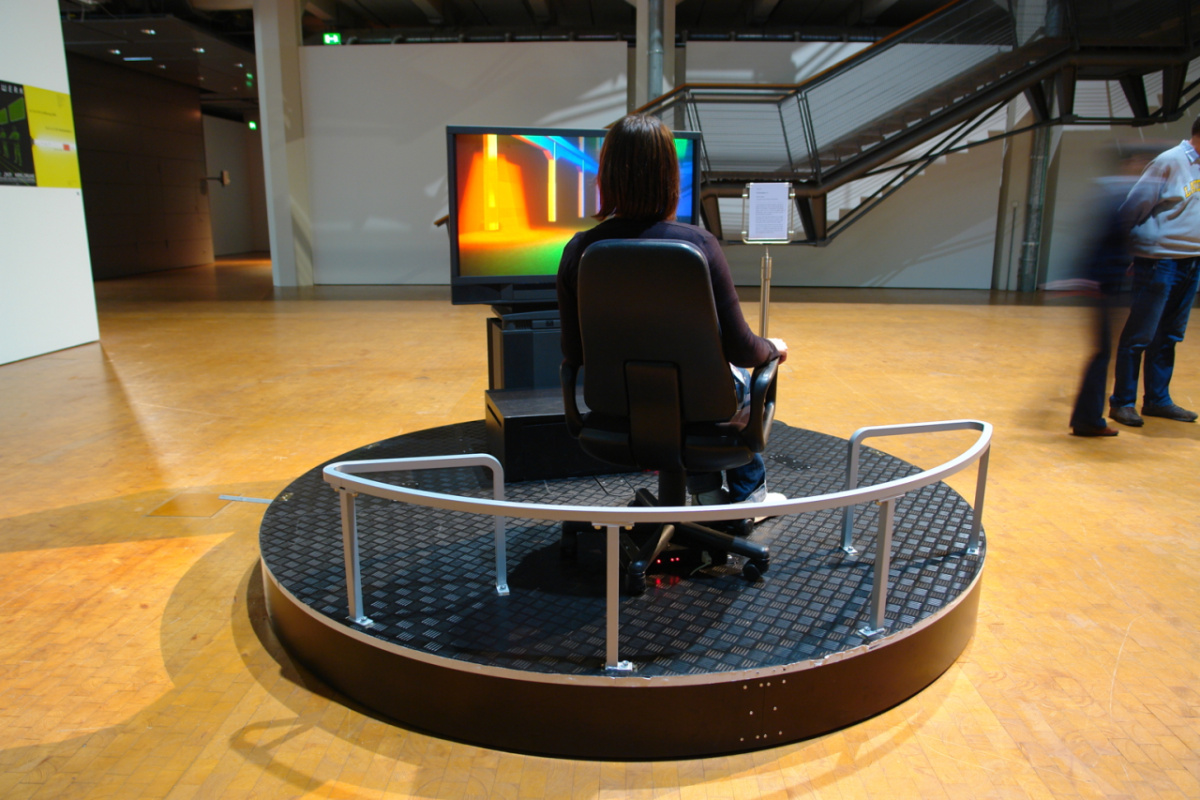
- A rotating chair on a motorised platform, a large screen, a computer – from these elements emerges a room within a room: a computer-generated museum that overlays the real exhibition space. In Jeffrey Shaw's installation, visitors navigate this virtual architecture solely through the movements of their bodies: leaning forward propels them through the space; turning the chair sets the entire platform in rotation – and with it, the projected image. The chair thus becomes an interface between body and computer. Instead of mouse or keyboard, physical gesture translates directly into digital navigation. Shaw explores a form of human-machine interaction that engages the entire body and fundamentally reimagines the relationship between viewer and image. »The Virtual Museum« comprises five rooms that exactly replicate the real exhibition space. Physical and digital worlds overlap in disorienting ways: the first virtual room displays a replica of the installation itself – including the chair on which the visitor sits. As soon as the journey begins, this chair remains visible in the image, now empty. The visitor's own body becomes an object within virtual space. To move from room to room, one passes through immaterial walls. Each room contains its own exhibits made of three-dimensional letters and texts: the first three are dedicated to classical artistic genres – painting, sculpture, cinema. The fourth room, by contrast, presents three moving signs – "A", "2" and "Z" – as red, green and blue light sources that bathe their surroundings in shifting colours. Here, what is only possible in a computer-generated world becomes visible. Jeffrey Shaw developed »The Virtual Museum« shortly after his work Legible City (1989–91). Both pieces explore the idea of navigable virtual spaces – a concept that barely existed at the time and has since become ubiquitous in the age of digital museum tours.
Author
MR
Images
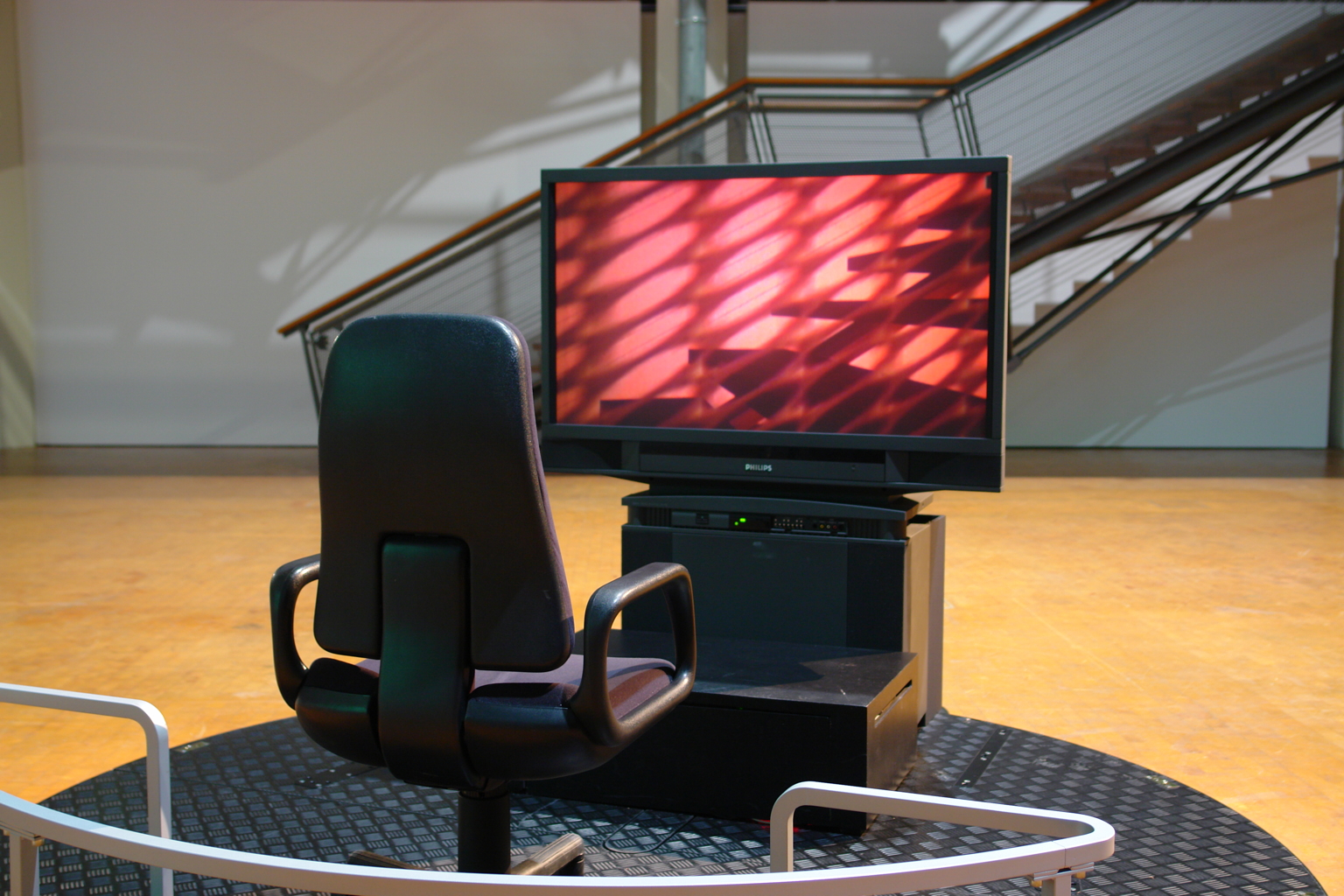 Jeffrey Shaw, »The Virtual Museum«, 1991, electric rotating platform interface, armchair motion sensors interface, custom-made electronics, computer (PC, operating system: Linux, custom software), rear-projection monitor, 170 x 250 x 250 cm © Jeffrey Shaw; Photo © ZKM | Center for Art and Media, Photo: Sónia Alves© Jeffrey Shaw; Photo © ZKM | Center for Art and Media, Photo: Sónia Alves
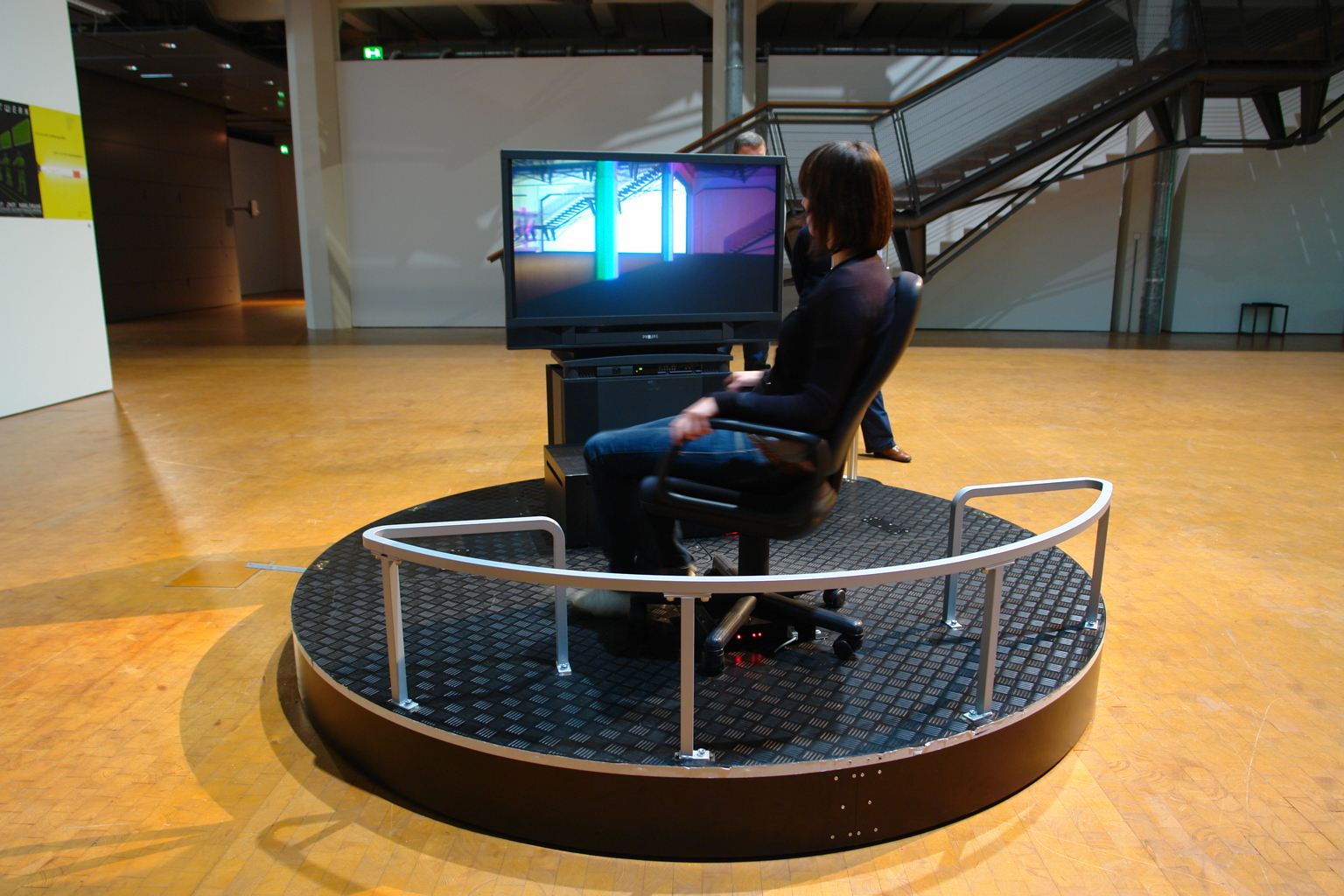 Jeffrey Shaw, »The Virtual Museum«, 1991, computer-based interactive installation, 170 x 250 x 250 cm, ZKM | Collection© Jeffrey Shaw; Photo © ZKM | Center for Art and Media, Photo: Sónia Alves
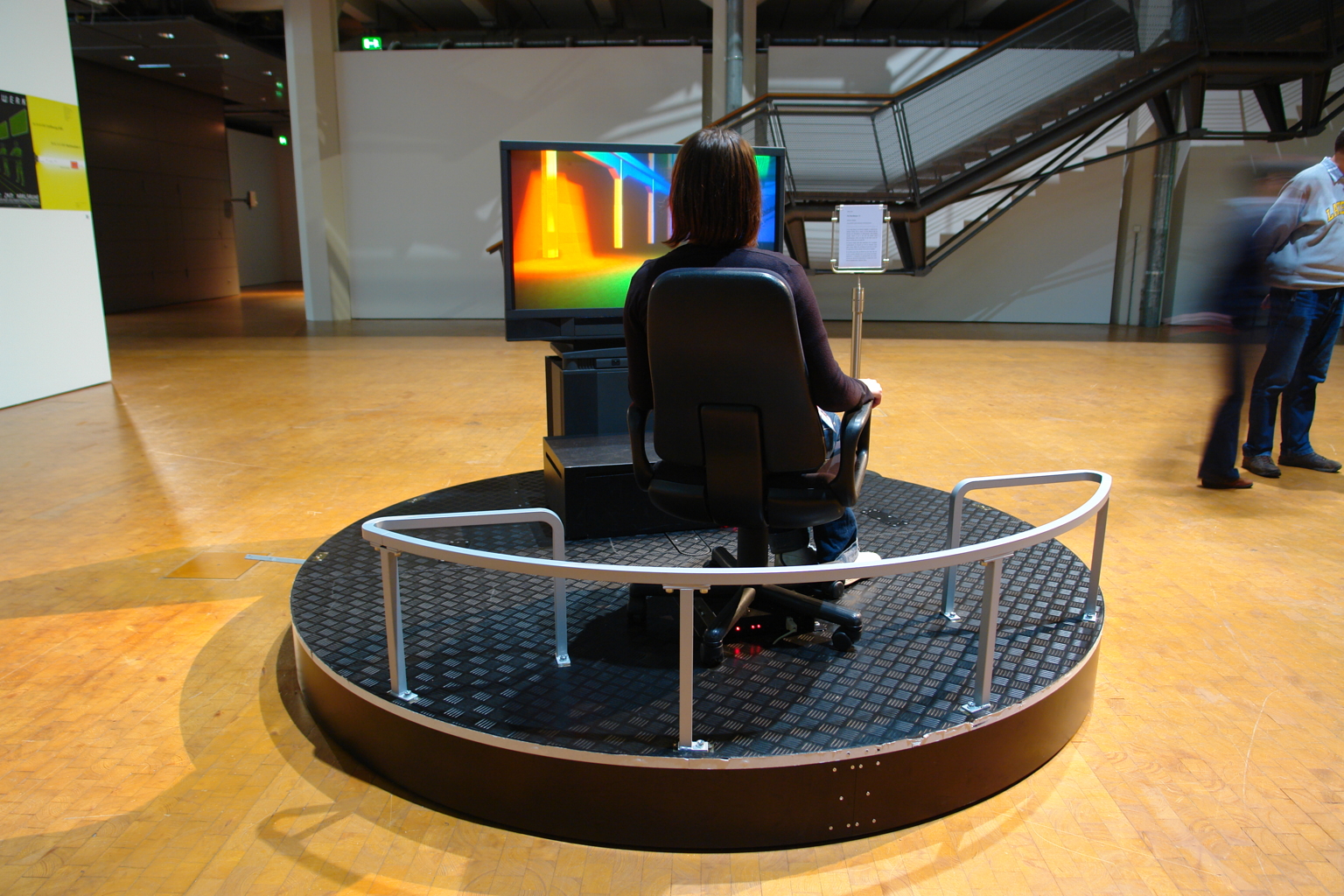 Jeffrey Shaw, »The Virtual Museum«, 1991, computer-based interactive installation, 170 x 250 x 250 cm, ZKM | Collection© Jeffrey Shaw; Photo © ZKM | Center for Art and Media, Photo: Sónia Alves